
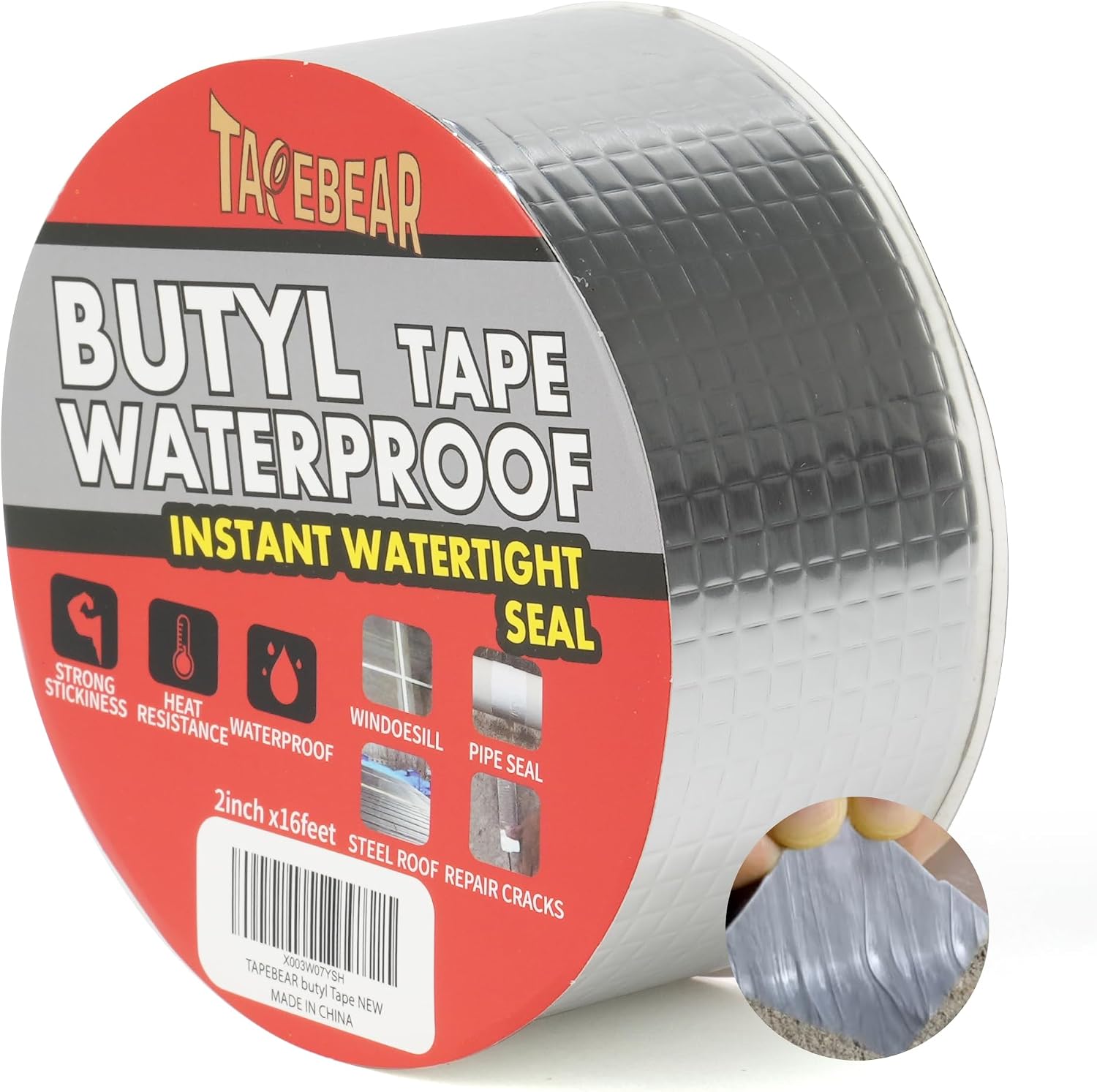
BUTYL TAPES IN KENYA
Description
Butyl tapes for waterproofing is a pressure-sensitive, permanently flexible waterproofing and sealing tape manufactured from synthetic butyl rubber, a highly impermeable elastomer known for its excellent resistance to water, moisture, air, and many environmental conditions. Unlike conventional adhesive tapes, butyl tape remains soft, tacky, and elastic after application, allowing it to accommodate movement, vibration, thermal expansion, and contraction between adjoining materials.
Technical Construction
A typical butyl tape for waterproofing consists of:
- Butyl rubber adhesive compound – The primary sealing layer, providing high tack, flexibility, and water resistance.
- Release liner – A silicone-coated paper or film protecting the adhesive before installation. It is removed immediately before application.
- Optional carrier or reinforcement – Some grades incorporate aluminium foil, polyester, non-woven fabric, or other reinforcement to improve dimensional stability, mechanical strength, or UV resistance.
Butyl tape is generally supplied in rolls, strips, or preformed profiles and is available in different thicknesses, widths, colours, and formulations depending on the application.
Key Technical Properties of Butyl tape for Waterproofing
- Excellent waterproofing: Forms a continuous moisture-resistant barrier when correctly compressed against a suitable substrate.
- Very low water permeability: Butyl rubber has extremely low permeability to water vapour and gases.
- High initial tack: Adheres readily to many clean, dry surfaces without requiring extensive curing.
- Permanent flexibility: Does not become rigid like many cementitious or solvent-based sealants.
- Movement accommodation: Its viscoelastic properties allow it to follow minor joint movement and substrate expansion/contraction.
- Air sealing: Suitable for sealing joints, overlaps, penetrations and interfaces where air and moisture infiltration must be controlled.
- Chemical resistance: Generally resistant to water, dilute acids, alkalis and many environmental contaminants, although compatibility must be checked for specific chemicals.
- Temperature resistance: Performance depends strongly on the formulation; specialist grades are available for elevated or low-temperature applications.
- UV/weather resistance: Good for many outdoor applications, particularly foil-faced or specially formulated grades.
- Non-curing: Most conventional butyl tapes for waterproofing remain permanently tacky rather than drying or curing.
Common Applications
Butyl tape is widely used in construction, roofing, waterproofing, HVAC, plumbing, automotive, marine and industrial applications. Typical uses include:
- Sealing
- Waterproofing dam liners and pond liners
- Sealing roofing sheets and roof penetrations
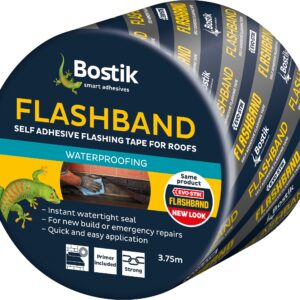
- Sealing flashing and metal-to-metal joints
- Sealing gutters and downpipes
- Sealing window and door frames
- Waterproofing membrane overlaps
- Sealing pipe penetrations
- HVAC duct and insulation joints
- Caravan and truck-body sealing
- Solar-panel and equipment penetrations
- Industrial equipment and enclosure sealing
- Temporary or permanent moisture barriers
Butyl Tapes for waterproofing/ PVC Dam Liners
For PVC dam liners, butyl tape can be useful for sealing interfaces and penetrations where the tape is chemically compatible with the particular PVC membrane. The substrate should be clean, dry and free from dust, grease and loose material. The tape should be firmly compressed to achieve intimate contact and prevent water channels.
For critical water-retaining structures, however, do not assume that every butyl tape is compatible with every PVC liner. The manufacturer’s compatibility data should be checked, especially where the tape will remain permanently submerged.
Installation Procedure
1. Prepare the surface: Remove dust, dirt, oil, moisture and loose particles.
2. Measure and cut: Cut the tape to the required length without stretching it.
3. Position: Remove the release liner and place the adhesive side onto the prepared surface.
4. Apply pressure: Press firmly using a roller or suitable hand tool, particularly along edges and overlaps.
5. Create continuous seals: Butt or overlap joints according to the tape manufacturer’s specifications. Avoid leaving gaps or channels through which water can travel.
6. Protect the seal: Where the application is exposed to mechanical damage, UV radiation or continuous immersion, use an appropriate protective layer or compatible sealant/system.
Important Technical Limitation of butyl tapes for waterproofing
Butyl tape is not a universal substitute for structural sealants, PVC welding, or mechanical fastening. Its performance depends on substrate compatibility, surface preparation, compression, temperature, tape thickness and environmental exposure.
For PVC dam liners, where a permanent watertight joint is required, the preferred joining method may be hot-air/thermal welding or another liner manufacturer’s approved joining system, with butyl tape used where specifically recommended for detailing and seali
Reviews
There are no reviews yet.