
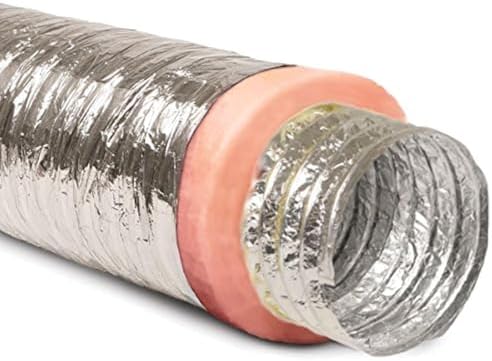
Flex Ducts for Industrial and Commercial Ventilation
Flex ducts, also known as flexible air ducts, transport air through ventilation, heating, and air conditioning systems. They connect ventilation fans, air conditioning units, and air outlets throughout buildings. Therefore, flexible ducting provides a practical solution for distributing air in residential, commercial, and industrial spaces.
Description
Flex Ducts for Industrial and Commercial Ventilation
Flex ducts, also known as flexible air ducts, transport air through ventilation, heating, and air conditioning systems. They connect ventilation fans, air conditioning units, and air outlets throughout buildings. Therefore, flexible ducting provides a practical solution for distributing air in residential, commercial, and industrial spaces.
Types of Flexible Air Ducts
There are several types of flex ducts for different applications. Aluminium flex ducts use flexible aluminium foil to transport air through ventilation systems. They offer convenient installation because they bend around obstacles and fit into confined spaces.
Insulated flex ducts contain an additional insulation layer. This layer helps reduce heat transfer and condensation. As a result, they suit many air conditioning and heating applications. In contrast, non insulated flex ducts lack additional thermal insulation. They work well where the installation does not require temperature control.
PVC flex ducts provide another option for selected ventilation applications. However, buyers should confirm the material’s temperature rating and suitability before installation. Some flexible ducts also feature steel wire reinforcement for improved shape retention and flexibility.
Common Applications of Flex Ducts
Flexible air ducts serve many ventilation and air conditioning needs. For example, contractors use them to connect fans to air outlets in offices, warehouses, workshops, and residential buildings. Additionally, suitable ducting can support kitchen exhaust and general air extraction systems.
Manufacturers commonly use aluminium foil, polyester film, PVC, and steel wire to produce flexible ducts. Some models also incorporate glass wool or other insulation materials. Consequently, the right choice depends on airflow requirements, operating temperatures, and installation conditions.
Choosing the Right Ventilation Ducting
Before purchasing flex ducts, consider their diameter, length, flexibility, insulation, and operating temperature. Furthermore, check the manufacturer’s specifications to ensure compatibility with your ventilation equipment.
Ordinary flexible ducts are not automatically suitable for steam pipes, boiler exhausts, or high temperature industrial gases. Instead, these applications require specially rated materials designed for their operating conditions.
Explore flexible air ducts and related ventilation materials for suitable building and industrial applications. These products fall under Ventilation Ducts and Accessories, a category that can also include duct connectors, ventilation grilles, diffusers, duct insulation, and compatible ventilation fans.
Reviews
There are no reviews yet.