
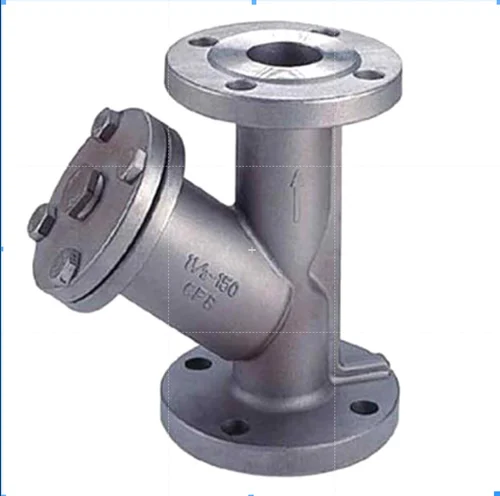
Boiler Strainers
Boiler strainers come in different sizes and configurations. Typical pipeline connection sizes include ½ inch, ¾ inch, 1 inch, 2 inches, 3 inches, 4 inches, and larger industrial sizes. Actual availability varies by manufacturer and design.
Description
Boiler Strainers: Product Description
Boiler strainers are essential filtration components used in industrial boilers, steam systems, and fluid handling equipment. They remove solid contaminants from liquids and protect downstream equipment from debris. These contaminants may include rust particles, pipe scale, welding slag, sediment, and other foreign materials. Consequently, boiler strainers help protect pumps, control valves, steam traps, and other sensitive components.
In industrial boiler maintenance, technicians install strainers at strategic points within feedwater, condensate, fuel, and other compatible process lines. However, the correct strainer depends on the fluid, operating temperature, pressure, flow rate, and required filtration level. Therefore, selecting the appropriate design is essential for safe and efficient operation.
Types of boiler strainers
1. Y-Type Strainers
Y-type strainers feature a compact body with an angled filtration chamber. They suit steam, water, oil, and other compatible fluids. Furthermore, their compact design makes them useful in installations with limited space. Technicians can remove the screen for inspection and cleaning.
2. Basket Strainers
Basket strainers use a removable perforated or mesh basket to capture solid particles. They commonly serve liquid feedwater, condensate, and process lines. Moreover, their larger debris-holding capacity can reduce cleaning frequency in suitable applications.
3. Duplex Strainers
Duplex strainers contain two filtration chambers connected through a changeover arrangement. Therefore, operators can isolate and clean one chamber while the other continues filtering, provided the system design permits uninterrupted operation.
4. Inline Mesh Strainers
Inline mesh strainers use a fine screen to capture smaller particles from compatible liquid streams. Their effectiveness depends on the mesh opening, available filtration area, and contaminant load. Consequently, they are useful where downstream equipment requires additional protection.
Main components of boiler strainers
A typical boiler strainer consists of several components. Each part contributes to filtration, pressure containment, or maintenance.
Strainer body: Forms the pressure-containing housing and directs fluid through the filtration element.
Filter screen or basket: Captures solid contaminants while allowing the intended fluid to pass.
Cover or cap: Provides access to the filtration element for inspection and cleaning.
Gasket or sealing ring: Helps prevent leakage between the body and cover.
Drain or blowdown connection: Allows removal of accumulated debris where the design provides one.
Pipeline connections: Threaded, flanged, or welded connections attach the strainer to the pipeline.
Materials of construction
Manufacturers produce boiler strainers from different materials to suit operating conditions.
Carbon steel: Provides mechanical strength for industrial pipelines and suitable pressure ratings.
Stainless steel: Offers corrosion resistance in compatible water and process applications.
Cast iron or ductile iron: Serves selected water and utility systems within specified operating limits.
Brass or bronze: Suits certain smaller or specialised fluid systems.
Stainless steel mesh: Provides a corrosion-resistant filtration element for compatible services.
However, material selection must account for water chemistry, treatment chemicals, temperature, pressure, and potential corrosion or erosion.
Technical specifications and selection
Boiler strainers come in different sizes and configurations. Typical pipeline connection sizes include ½ inch, ¾ inch, 1 inch, 2 inches, 3 inches, 4 inches, and larger industrial sizes. Actual availability varies by manufacturer and design.
| Specification | Technical consideration |
|---|---|
| Nominal pipe size | Must match the pipeline and required flow capacity |
| Pressure rating | Must meet the system’s design requirements |
| Temperature rating | Must suit the operating fluid and service conditions |
| Filtration rating | Must match the particle size requiring removal |
| Screen material | Must resist the fluid’s chemical and thermal conditions |
| Connection type | Threaded, flanged, or welded, as applicable |
| Pressure drop | Must remain within acceptable system limits |
| Maintenance access | Must allow safe inspection and screen cleaning |
Filtration ratings may be expressed in microns or mesh size. A smaller micron rating generally captures finer particles. However, it can also increase pressure drop and blockage risk. Therefore, choose a filtration level that balances equipment protection with the required flow rate.
Applications in boiler and steam systems
Boiler strainers support several industrial operations. For example, technicians use suitable strainers upstream of feedwater pumps, control valves, steam traps, and other equipment that requires protection from debris. They may also install them in condensate return lines and compatible auxiliary process circuits.
Nevertheless, a standard liquid strainer is not automatically suitable for every steam application. Steam service requires a strainer specifically rated for the relevant pressure and temperature. In addition, strainers do not replace boiler water treatment, deaeration, blowdown, or appropriate chemical control.
Maintenance and operational benefits
Regular inspection helps maintain effective filtration. First, technicians should monitor the pressure drop across the strainer. An increasing pressure drop may indicate screen blockage. Next, they should isolate and depressurise the equipment before opening it, following approved safety procedures. They can then inspect the screen, remove accumulated debris, check the seals, and reinstall the assembly correctly.
As a result, properly selected and maintained boiler strainers can reduce debris-related equipment damage, support reliable fluid flow, and lower unplanned maintenance costs. However, operators must follow the manufacturer’s instructions and applicable pressure-system safety requirements.
Product availability: Boiler strainers are available in different sizes, materials, connection types, and filtration ratings for industrial boiler maintenance, steam piping, feedwater systems, and condensate installations. Always confirm the operating conditions and technical specifications before purchasing.
Reviews
There are no reviews yet.