
Industrial PTFE (polytetrafluoroethylene)
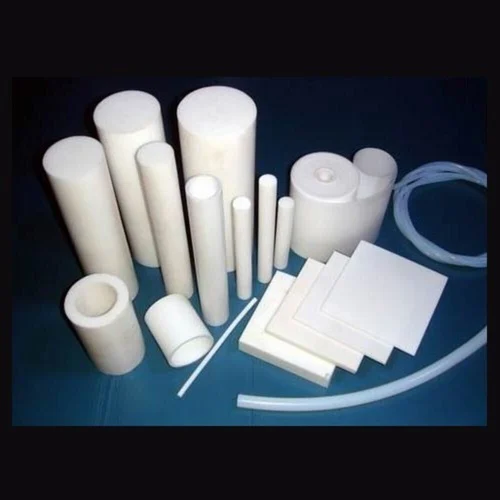
Industrial PTFE (polytetrafluoroethylene) is a high-performance fluoropolymer widely used in manufacturing, chemical processing, sealing, insulation, and engineering applications. It consists of carbon and fluorine atoms arranged in a stable polymer structure. Consequently, PTFE offers excellent chemical resistance, a low coefficient of friction, and reliable performance in demanding industrial environments. Manufacturers supply PTFE in various forms, including sheets, rods, tubes, films, gaskets, seals, and machined components.
Description
Technical Description of Industrial PTFE (polytetrafluoroethylene)
Industrial PTFE (polytetrafluoroethylene) is a high-performance fluoropolymer widely used in manufacturing, chemical processing, sealing, insulation, and engineering applications. It consists of carbon and fluorine atoms arranged in a stable polymer structure. Consequently, PTFE offers excellent chemical resistance, a low coefficient of friction, and reliable performance in demanding industrial environments. Manufacturers supply PTFE in various forms, including sheets, rods, tubes, films, gaskets, seals, and machined components.
Properties and Characteristics of PTFE
PTFE provides several technical advantages that make it suitable for industrial applications. First, it resists many acids, alkalis, solvents, and corrosive chemicals. Therefore, engineers often select it for chemical handling equipment and process systems. However, compatibility must still be verified for specific chemicals, temperatures, and operating conditions.
In addition, PTFE has a very low coefficient of friction. As a result, it reduces friction between moving components and supports smooth operation. Its non-stick surface also limits material adhesion, making cleaning easier in suitable applications.
PTFE performs across a broad temperature range. Many standard grades operate at approximately −200°C to +260°C, although the maximum allowable temperature depends on the grade, load, exposure time, and application. Furthermore, PTFE provides excellent electrical insulation and absorbs very little moisture. However, it has relatively low stiffness compared with many engineering plastics and can deform under sustained loads. Engineers must therefore consider creep, cold flow, and dimensional stability when designing components.
Types and Available Forms of Industrial PTFE (polytetrafluoroethylene)
Industrial PTFE comes in several forms to meet different engineering requirements.
PTFE sheets: Used for gaskets, linings, sliding surfaces, and chemical-resistant barriers.
PTFE rods: Suitable for machining bushes, spacers, valve components, and wear-resistant parts.
PTFE tubes: Used for chemical transfer, laboratory equipment, and electrical insulation where the grade and design are suitable.
PTFE films: Applied in insulation, release surfaces, protective layers, and specialised manufacturing processes.
PTFE gaskets and seals: Designed to resist chemical attack and prevent leakage in compatible flange connections and industrial equipment.
Expanded PTFE (ePTFE): Offers a flexible, compressible structure that suits demanding gasket and sealing applications.
Manufacturers also supply filled PTFE grades containing materials such as glass fibre, carbon, graphite, or bronze. These additives can improve wear resistance, stiffness, thermal performance, or load-bearing capability, depending on the formulation.
Industrial Applications
PTFE supports operations across chemical processing, food manufacturing, pharmaceuticals, power generation, and general engineering. For example, factories use PTFE gaskets in compatible chemical pipelines and vessels. Similarly, maintenance teams install PTFE bushes and sliding components where low friction and chemical resistance are important.
Moreover, electrical manufacturers use PTFE for specialised wire and cable insulation. Its non-stick properties also make it valuable in selected industrial release applications and processing equipment.
Handling and Maintenance of Industrial PTFE (polytetrafluoroethylene)
Proper material selection helps maximise PTFE service life. First, confirm the chemical compatibility, operating temperature, pressure, and mechanical load. Next, select the correct grade, dimensions, and component design. During installation, avoid excessive compression because PTFE can deform under sustained pressure.
Finally, inspect PTFE components for wear, cracking, deformation, and leakage where applicable. Although PTFE resists many chemicals, it does not suit every operating condition. Therefore, follow the manufacturer’s technical data and application limits.

Reviews
There are no reviews yet.