Ice Cream Cups and Paper Cups – Disposable Food Packaging Solutions in Kenya
Ice cream cups and paper cups provide practical, hygienic and convenient packaging solutions for the food service, hospitality and beverage industries. These disposable packaging products support the safe storage, serving and transportation of different food and drink products. Furthermore, they help food businesses maintain cleanliness, improve customer convenience and establish consistent product presentation.
As demand for takeaway meals, delivery services, ice cream parlours, coffee shops and quick-service restaurants continues to grow, businesses increasingly require reliable disposable packaging. Consequently, manufacturers and food distributors must select cups that offer suitable strength, food safety, temperature resistance and functional performance.
1. Ice Cream Cups
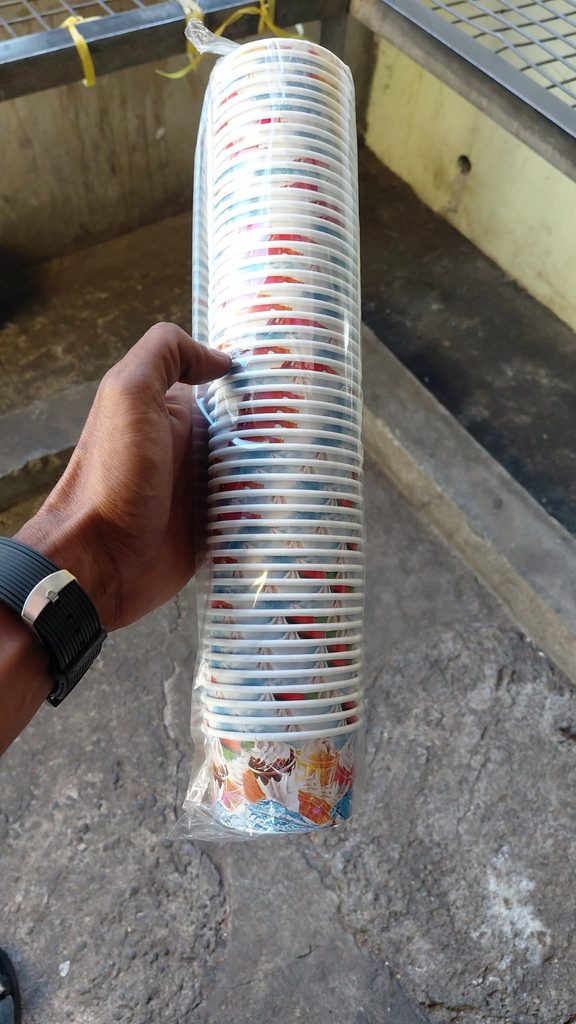
Ice cream cups are specially designed disposable food containers used for serving, storing and distributing ice cream, frozen yoghurt, gelato, sorbets and other chilled desserts. Manufacturers produce these cups using food-grade paperboard, coated paper and selected plastic materials. In addition, their construction provides a convenient alternative to reusable serving containers, particularly in high-volume food service operations.
Unlike ordinary beverage cups, ice cream cups must withstand prolonged contact with cold products and moisture. Therefore, manufacturers apply suitable internal coatings or moisture-resistant barriers to minimise liquid penetration, softening and structural deterioration. These protective layers help maintain the cup’s integrity during filling, storage, handling and consumption.
Types of ice cream cups
- Paper ice cream cups: These cups feature coated paperboard construction and support single-serving ice cream and frozen desserts.
- Kraft ice cream cups: Their natural brown appearance provides an attractive packaging option for businesses seeking a simple, contemporary presentation.
- Plastic ice cream cups: These containers offer moisture resistance and visibility where transparent packaging is desirable.
- Printed ice cream cups: Custom printing allows businesses to display their logos, brand colours, promotional messages and product information.
- Lidded ice cream cups: These cups incorporate compatible lids to support hygienic storage, takeaway services and delivery operations.
Common ice cream cup capacities
| Capacity | Typical application |
|---|---|
| 3 oz | Small ice cream servings and tastings |
| 4 oz | Single portions and children’s servings |
| 5 oz | Standard individual servings |
| 8 oz | Large ice cream portions and frozen yoghurt |
| 12 oz | Premium dessert servings |
| 16 oz | Family-style or larger takeaway portions |
Actual dimensions and capacities vary between manufacturers.
Technical considerations when selecting ice cream cups
First, businesses should evaluate the material composition and food-contact suitability of each cup. The internal coating must withstand moisture without compromising the packaging’s intended application. Secondly, the cup should provide sufficient rigidity to resist deformation during filling, stacking and transportation.
Moreover, businesses should consider rim diameter, cup height, wall thickness and lid compatibility. These specifications influence filling efficiency, serving convenience and packaging performance. For delivery applications, a secure-fitting lid is particularly important because it helps minimise contamination and accidental spillage.
2. Paper Cups
Paper cups are disposable containers manufactured primarily from food-grade paperboard with specialised barrier coatings. They serve a wide range of hot and cold beverages, including coffee, tea, drinking chocolate, juice, water and soft drinks. Consequently, they remain essential packaging products for restaurants, cafés, hotels, offices, catering companies and takeaway establishments.
Modern paper cups combine lightweight construction with practical liquid resistance. Manufacturers achieve these properties by applying protective coatings that reduce liquid absorption and prevent premature leakage. Depending on the intended application, these barriers may include polyethylene (PE), aqueous coatings or other specialised food-contact materials.
Furthermore, paper cups offer excellent opportunities for product branding. Businesses can customise their surfaces with company logos, promotional graphics, product descriptions and other marketing information. As a result, disposable cups can serve both functional and promotional purposes.
Types of paper cups
1. Single-wall paper cups
Single-wall cups consist of one primary paperboard wall with an internal liquid-resistant coating. They are commonly used for cold beverages and certain hot drinks. However, hot beverages may require an additional sleeve to improve handling comfort and reduce heat transfer.
2. Double-wall paper cups
Double-wall cups incorporate an additional external paper layer that provides improved insulation. Therefore, they offer better handling comfort when serving hot coffee, tea and other heated beverages.
3. Ripple-wall paper cups
Ripple-wall cups feature a textured external layer that creates insulating air spaces around the primary cup. This construction improves thermal insulation while providing a more secure gripping surface.
4. Kraft paper cups
Kraft paper cups feature a natural brown exterior that provides a distinctive appearance. They are popular among coffee shops, restaurants and takeaway businesses seeking a simple packaging design.
5. Printed and branded paper cups
These cups feature customised graphics, logos and promotional messages. In addition to serving beverages, they help businesses strengthen brand recognition and maintain consistent packaging presentation.
Common paper cup capacities
| Capacity | Typical application |
|---|---|
| 4 oz | Espresso and small beverages |
| 6 oz | Small tea and coffee servings |
| 7 oz | Standard hot drinks |
| 8 oz | Regular takeaway coffee |
| 12 oz | Medium coffee, tea and juice |
| 16 oz | Large beverages and iced drinks |
| 20 oz | Extra-large cold beverages |
Cup capacities and dimensions depend on the manufacturer’s specifications.
3. Material Composition and Manufacturing Considerations
The performance of disposable cups depends largely on their raw materials, manufacturing processes and quality-control standards.
Food-grade paperboard forms the main structural component of most paper cups. Manufacturers select paperboard according to its grammage, stiffness, thickness and intended application. Subsequently, specialised coating processes provide the liquid barrier required for safe beverage and food contact.
During production, manufacturers convert printed or unprinted paperboard into cup blanks. They then form the blanks into cylindrical or tapered bodies and attach circular bottom discs through heat-sealing processes. Finally, manufacturers roll the upper edges to create smooth, reinforced rims.
For ice cream cups, manufacturers may apply additional moisture-resistant treatments to improve performance during cold storage and prolonged contact with frozen desserts.
Importantly, businesses should verify that the materials and coatings comply with applicable food-contact requirements. They should also evaluate leakage resistance, dimensional consistency, stacking performance and compatibility with available lids.
4. Applications Across Different Industries
Ice cream cups and paper cups serve several commercial sectors.
| Industry | Packaging application |
|---|---|
| Ice cream parlours | Ice cream, gelato and frozen yoghurt |
| Restaurants | Takeaway desserts and beverages |
| Coffee shops | Coffee, tea and chocolate |
| Hotels | Room service and beverage stations |
| Fast-food outlets | Cold drinks and dessert portions |
| Catering companies | Event beverages and dessert services |
| Supermarkets | Pre-portioned desserts and chilled products |
| Offices | Tea, coffee and drinking water |
Additionally, food delivery companies and event organisers rely on disposable cups to simplify distribution and reduce the need for washing reusable serving containers.
5. Custom Branding and Packaging Options
Custom branding provides an important commercial advantage for businesses operating in competitive food and beverage markets. For this reason, restaurants, cafés, ice cream manufacturers and distributors increasingly consider packaging design as part of their marketing strategy.
Businesses can customise ice cream cups and paper cups using printed logos, corporate colours, promotional messages and product information. They can also select different cup sizes, paper finishes, coating specifications and compatible lids.
Furthermore, bulk branding can provide consistent packaging across multiple business outlets. However, businesses should establish minimum order quantities, printing requirements, artwork specifications and production lead times before placing large orders.
6. Quality and Procurement Considerations
When purchasing ice cream cups and paper cups in bulk, businesses should assess several technical and commercial factors.
- Food-grade compliance: Confirm that materials and coatings are suitable for their intended food-contact applications.
- Leakage resistance: Evaluate the effectiveness of the internal barrier and bottom sealing.
- Structural strength: Ensure that cups maintain their shape during filling, stacking and transportation.
- Thermal insulation: Select appropriate wall construction for hot beverages.
- Moisture resistance: Verify suitability for chilled desserts and cold beverages.
- Lid compatibility: Confirm that lids fit securely and match the cup’s rim dimensions.
- Printing quality: Assess colour consistency, print durability and branding accuracy.
- Supply consistency: Establish reliable production capacity and availability for recurring orders.
In addition, procurement teams should compare unit prices, carton quantities, minimum order requirements and delivery arrangements. Although lower purchasing prices may reduce immediate expenditure, consistent product quality and reliable supply often provide better long-term commercial value.
Conclusion
Ice cream cups and paper cups are essential disposable packaging products for modern food service, hospitality and beverage businesses. Their practical designs, lightweight construction and customisation opportunities make them suitable for different commercial applications.
While ice cream cups primarily support frozen desserts and chilled products, paper cups provide versatile packaging for hot and cold beverages. Therefore, selecting the correct material, capacity, wall construction and coating specification helps businesses achieve reliable packaging performance, improve customer experience and maintain professional product presentation.
SEO elements for publication
Primary keyphrase: Ice cream cups and paper cups
Secondary keyphrases:
- Disposable ice cream cups in Kenya
- Paper cups in Kenya
- Food-grade disposable cups
- Custom printed paper cups
- Wholesale ice cream cups
- Disposable takeaway cups
- Hot and cold beverage cups
- Branded food packaging cups
SEO title: Ice Cream Cups and Paper Cups in Kenya | Food Packaging
Meta description: Explore ice cream cups and paper cups for food businesses. Discover sizes, materials, types, custom branding and wholesale packaging solutions in Kenya.
Suggested URL slug: ice-cream-cups-paper-cups-kenya
Suggested internal links:
- Food Packaging Materials
- Burger Boxes and Takeaway Food Boxes
- Greaseproof Paper Sheets
- Disposable Food Packaging Supplies
- Custom Branded Packaging Boxes