
Paper Cups
Paper cups in Kenya are essential disposable food packaging products designed for serving hot and cold beverages in commercial, institutional and domestic environments. They provide a convenient, hygienic and practical alternative to reusable drinking containers. Moreover, manufacturers produce paper cups in different capacities, designs and material specifications to meet the diverse requirements of hotels, restaurants, coffee shops, catering companies and beverage distributors.
Description
Paper Cups – Sizes, Types, Applications and Supply Solutions
Paper cups in Kenya are essential disposable food packaging products designed for serving hot and cold beverages in commercial, institutional and domestic environments. They provide a convenient, hygienic and practical alternative to reusable drinking containers. Moreover, manufacturers produce paper cups in different capacities, designs and material specifications to meet the diverse requirements of hotels, restaurants, coffee shops, catering companies and beverage distributors.
At Maavaroz Industrial Limited, paper cups form part of our wider range of disposable food packaging materials suitable for hospitality businesses, takeaway outlets and food-service operations.
1. Paper Cups in Kenya in Different Sizes and Capacities
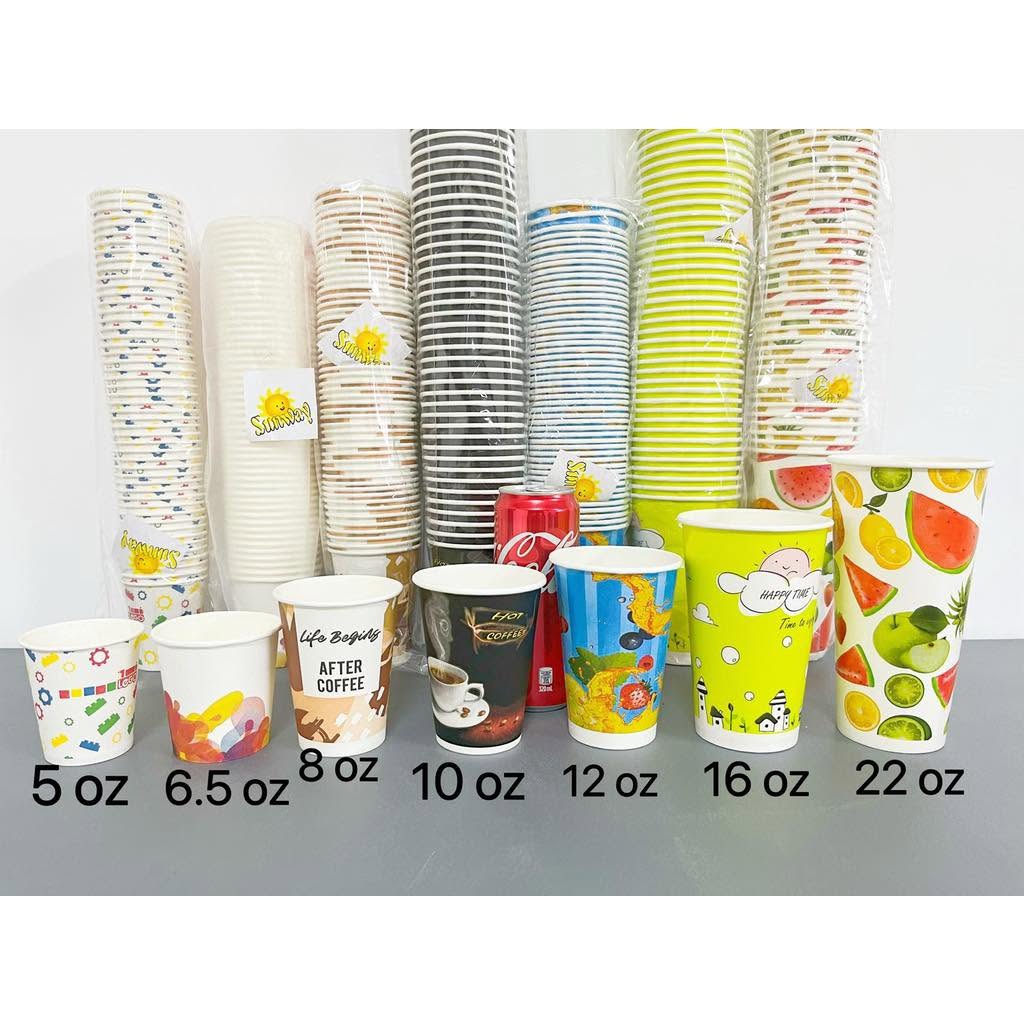
Paper cup sizes determine the volume of beverages a container can accommodate. Therefore, selecting the correct capacity helps businesses control serving portions, minimise packaging waste and improve customer convenience.
Commonly available paper cup sizes include:
| Cup size | Approximate capacity | Common applications |
|---|---|---|
| 2 oz | 60 ml | Espresso samples and tasting portions |
| 4 oz | 120 ml | Small coffee servings and samples |
| 6 oz | 180 ml | Tea and small coffee servings |
| 7 oz | 210 ml | Tea, coffee and water |
| 8 oz | 240 ml | Standard takeaway coffee and tea |
| 9 oz | 270 ml | Juice and cold beverages |
| 10 oz | 300 ml | Coffee, soft drinks and refreshments |
| 12 oz | 360 ml | Medium coffee, juice and cold drinks |
| 14 oz | 420 ml | Large beverages |
| 16 oz | 480 ml | Large coffee, iced beverages and smoothies |
| 20 oz | 600 ml | Large cold drinks and refreshments |
| 22 oz | 650 ml | Smoothies, juices and soft drinks |
| 24 oz | 720 ml | Large cold beverages |
Note: These are approximate nominal capacities. Actual dimensions and filling capacities vary between manufacturers.
2. Types of Paper Cups
Paper cups come in different constructions depending on beverage temperature, insulation requirements and intended applications.
Single-wall paper cups feature one layer of paperboard with an internal moisture-resistant lining. Consequently, they provide an economical packaging option for serving water, juice, soft drinks and moderately hot beverages. They are particularly suitable for offices, restaurants, events and takeaway businesses.
Double-wall paper cups incorporate an additional external paper layer that improves thermal insulation. As a result, they reduce heat transfer to the user’s hands and provide a more comfortable drinking experience. Coffee shops, hotels and takeaway beverage outlets commonly use these cups for hot coffee and tea.
Ripple-wall cups feature a textured outer layer that creates insulating air spaces around the cup. Furthermore, this construction improves grip and reduces direct contact with hot surfaces. They are particularly suitable for specialty coffee, hot chocolate and premium takeaway beverages.
Kraft paper cups use brown kraft-style paperboard to create a natural packaging appearance. They offer an attractive presentation for coffee shops, restaurants and businesses seeking distinctive food packaging.
Cold beverage paper cups use moisture-resistant materials and suitable internal coatings to withstand liquid contact and condensation. Therefore, businesses use them for juices, iced coffee, smoothies, soft drinks and other chilled refreshments.
3. Materials and Technical Specifications
The performance of paper cups depends on the quality of their constituent materials and manufacturing processes.
Paperboard: Manufacturers use food-contact-suitable paperboard to provide structural strength, rigidity and shape retention.
Internal lining: PE (polyethylene) or other suitable barrier coatings help prevent liquid leakage and protect the paperboard from moisture.
Water-based coatings: Some manufacturers use alternative barrier technologies to improve moisture resistance and support specific disposal or recycling requirements.
Seam construction: Proper side-seam bonding and bottom sealing help prevent leakage during beverage service.
Rim formation: Manufacturers roll the upper edge to improve drinking comfort, maintain structural stability and support compatible lids.
Printing and branding: Businesses can customise paper cups with company logos, brand colours, promotional messages and product information.
Importantly, food-contact compliance, coating composition and disposal requirements should guide procurement decisions. Not every paper cup is automatically recyclable or compostable.
4. Applications of Paper Cups in Kenya
Paper cups serve multiple purposes across the hospitality, catering and food-service industries.
Hotels and restaurants: Hotels use paper cups for breakfast services, takeaway beverages, room-service refreshments and outdoor catering.
Coffee shops: Coffee businesses use different cup capacities for espresso, cappuccino, latte and takeaway coffee.
Offices and institutions: Companies, schools, hospitals and other institutions use disposable cups for drinking water, tea and coffee.
Fast-food outlets: Quick-service restaurants use paper cups for soft drinks, juices and takeaway beverage orders.
Events and catering: Event organisers purchase paper cups in bulk for conferences, exhibitions, parties and corporate functions.
Juice bars: Juice businesses use larger capacities for fresh juices, smoothies and chilled beverages.
Promotional activities: Companies use branded paper cups to improve product visibility and strengthen brand recognition.
5. Important Considerations When Purchasing
When sourcing paper cups for commercial use, consider the following factors:
Wall construction: Choose single-wall, double-wall or ripple-wall designs depending on insulation requirements.
Lid compatibility: Ensure that cup diameters match the available lids.
Branding: Consider customised printing for businesses that require consistent brand presentation.
Food safety: Confirm that materials and coatings meet applicable food-contact requirements.
6. Bulk Supply
Paper cups represent an important category of disposable food packaging materials in Kenya’s hospitality and food-service market. In particular, hotels, restaurants, coffee shops, catering companies, juice bars and corporate institutions create recurring demand for different cup capacities.
Furthermore, businesses that purchase packaging consumables regularly benefit from reliable bulk suppliers who maintain consistent product specifications and dependable stock availability.
Maavaroz Industrial Limited supplies packaging solutions for commercial and institutional applications. Our paper cup range covers different capacities, material constructions and beverage-serving requirements, helping businesses source suitable disposable packaging for their daily operations.




Reviews
There are no reviews yet.