
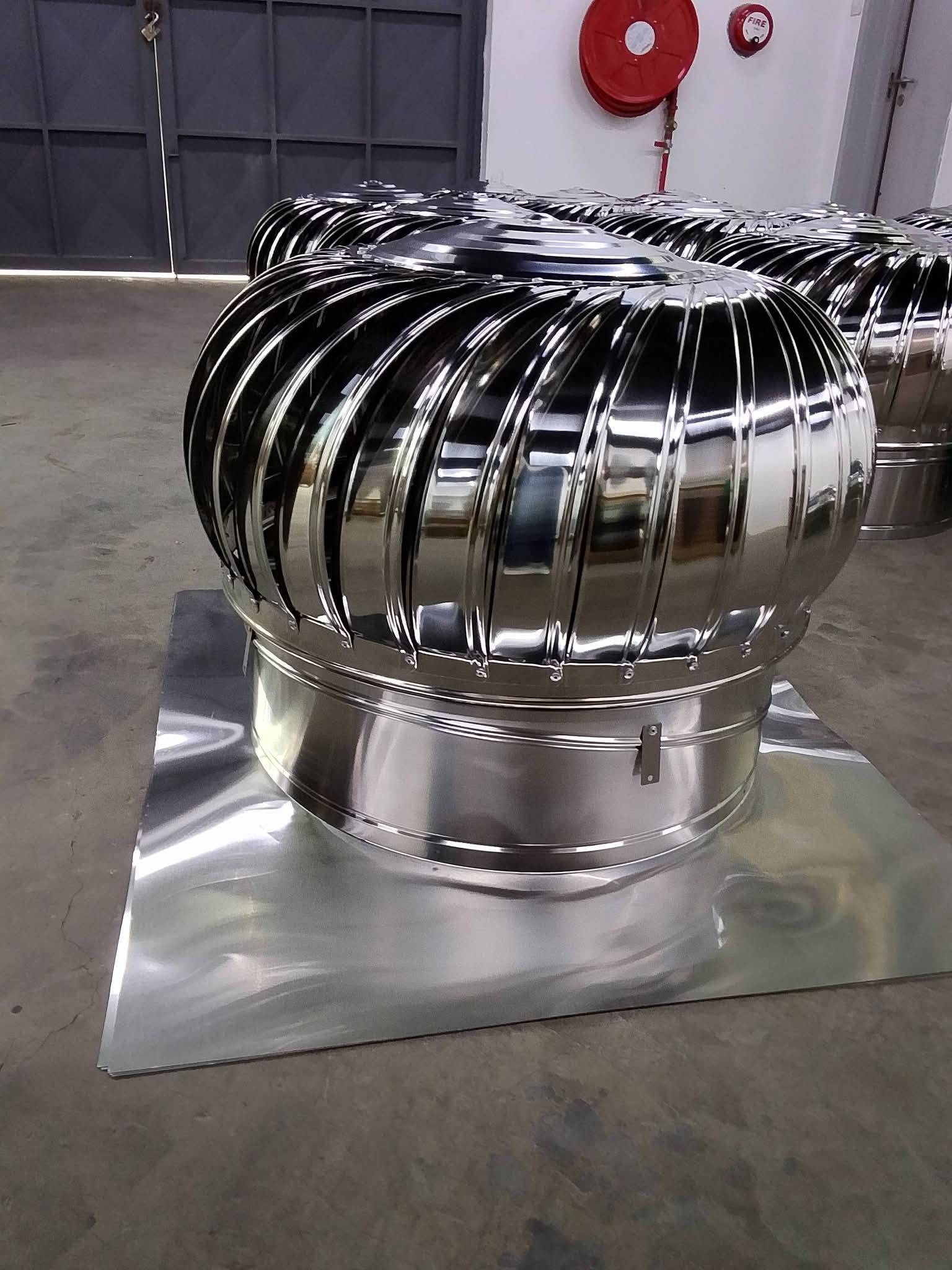
Roof Turbine Ventilator In Kenya
Roof turbine ventilators provide effective natural ventilation for buildings. They use wind movement to extract hot and stale air. Therefore, they help improve airflow without relying on powered ventilation systems.
Description
Roof Turbines in Kenya: Types, Working Principles, Benefits, Installation and Industrial Applications
Roof turbines, also known as turbine roof ventilators or rotary roof ventilators, are mechanical ventilation devices designed to remove accumulated hot air, moisture, fumes and other unwanted airborne contaminants from enclosed buildings. They provide an effective and energy-efficient ventilation solution for residential, commercial, agricultural and industrial facilities. Unlike conventional electric ventilation fans, most roof turbines operate through natural wind energy and the thermal pressure differences between indoor and outdoor environments. Consequently, they provide continuous air extraction without requiring electricity or complicated mechanical systems.
In Kenya, roof turbine ventilators have become increasingly important because of rising industrial activity, changing building designs and the need for improved indoor air quality. Moreover, warehouses, factories, workshops, shopping centres and commercial buildings often experience excessive heat accumulation, particularly beneath metal roofing sheets. Therefore, installing appropriately sized roof turbines helps regulate indoor temperatures while improving general air circulation.
How Roof Turbine Ventilators Work
Roof turbines operate through a combination of wind energy, rotational movement and natural convection. Their external turbine assembly consists of specially shaped aluminium or galvanised steel blades arranged around a central rotating shaft. As wind passes across these blades, it creates aerodynamic forces that cause the turbine head to rotate.
During operation, the rotating blades generate a pressure difference that assists in extracting warm, stale air from inside the building. Consequently, accumulated hot air escapes through the ventilator while cooler replacement air enters through suitable openings, windows, doors and ventilation inlets.
Furthermore, warm air naturally rises because it has a lower density than cooler surrounding air. This process, commonly known as the stack effect, supports continuous upward air movement towards the roof. As a result, roof turbines can continue extracting indoor air even when wind speeds remain relatively low, provided sufficient temperature and pressure differences exist.
Importantly, effective ventilation requires an adequate supply of replacement air. Therefore, installing roof turbines without providing suitable air inlets may reduce their overall extraction performance.
Main Components of a Roof Turbine
A standard roof turbine ventilator incorporates several engineered components that support efficient rotation, structural stability and weather protection.
| Component | Function |
|---|---|
| Turbine blades | Capture wind energy and generate rotational movement. |
| Central shaft | Supports the rotating turbine assembly. |
| Bearings | Reduce friction and facilitate smooth rotation. |
| Turbine housing | Protects internal components and directs airflow. |
| Mounting base | Secures the ventilator to the roof structure. |
| Weatherproof flashing | Prevents rainwater from entering through the roof opening. |
| Protective mesh | Helps prevent birds and larger debris from entering |
Types of Roof Turbine Ventilators
Roof turbines are available in different designs, materials and capacities to accommodate varying building requirements. However, the most suitable option depends on the building’s dimensions, roof configuration, ventilation requirements and environmental conditions.
1. Aluminium Roof Turbines
Aluminium roof turbines are among the most commonly used ventilation products. They offer excellent resistance to atmospheric corrosion while maintaining relatively low structural weight. Furthermore, their lightweight construction reduces additional loading on roof structures. Therefore, they are suitable for warehouses, factories, workshops and commercial buildings.
2. Galvanised Steel Roof Turbines
Galvanised steel turbines feature protective zinc coatings that improve resistance to rust and environmental deterioration. In addition, their relatively strong construction makes them suitable for demanding industrial applications. However, damaged galvanised coatings can expose the underlying steel to corrosion.
3. Stainless Steel Roof Turbines
Stainless steel ventilators provide enhanced corrosion resistance and durability. Consequently, they are particularly suitable for environments exposed to moisture, chemical vapours and demanding operating conditions. Although their initial purchase cost may be higher, their durability can offer long-term operational advantages.
4. Heavy-Duty Industrial Roof Turbines
Heavy-duty industrial roof turbines feature reinforced construction, robust mounting systems and appropriately designed rotating assemblies. Manufacturers design these units for larger industrial spaces, including manufacturing plants, production facilities, warehouses and engineering workshops.
Major Benefits of Installing Roof Turbines
Roof turbine ventilation offers several operational, environmental and economic advantages. For this reason, many property owners and industrial facility managers consider turbine ventilators an effective alternative to electricity-dependent extraction systems.
1. Effective Heat Extraction
Industrial buildings frequently accumulate excessive heat from machinery, production equipment, electrical installations and direct solar radiation. However, roof turbines help remove rising hot air before it becomes excessively concentrated inside the building. As a result, they contribute to more comfortable working conditions.
2. Improved Indoor Air Quality
Furthermore, roof turbines assist in removing stale air, humidity, unwanted odours and certain airborne contaminants. This improves general air circulation and helps maintain a healthier indoor environment. Nevertheless, specialised extraction systems remain necessary where workplaces generate hazardous dust, toxic fumes or concentrated chemical vapours.
3. Reduced Energy Consumption
Unlike powered extraction fans, conventional wind-driven roof turbines do not require electrical connections for normal operation. Consequently, they can reduce electricity consumption and associated operating costs. In addition, they require relatively little routine maintenance when properly installed.
4. Moisture and Condensation Control
Excessive indoor humidity can encourage condensation, corrosion, mould development and deterioration of stored materials. Therefore, extracting humid air helps control moisture accumulation and supports better building conditions.
5. Extended Equipment and Building Life
Excessive temperatures and moisture can accelerate the deterioration of roofing materials, electrical installations, machinery and stored products. However, improved ventilation helps reduce these environmental stresses. Consequently, roof turbines can contribute to better building maintenance and equipment protection.
6. Environmentally Friendly Operation
Since wind-driven turbines operate without electricity, they provide a practical ventilation solution with minimal operational energy requirements. Moreover, their simple mechanical construction reduces dependence on complex electrical equipment
Industrial and Commercial Applications of Roof Turbines
Roof turbine ventilators serve numerous applications across different industries. Their versatility makes them particularly useful in buildings where heat accumulation and inadequate natural ventilation affect daily operations.
| Application | Ventilation requirement |
|---|---|
| Manufacturing factories | Extraction of accumulated hot air. |
| Warehouses | Temperature and moisture management. |
| Automotive workshops | General air circulation and heat removal. |
| Commercial kitchens | Supplementary extraction of warm air and humidity. |
| Shopping centres | Improved general indoor ventilation. |
| Agricultural buildings | Reduction of excessive heat and moisture. |
| Poultry houses | General ventilation and humidity management. |
| Boiler houses | Supplementary heat extraction. |
| Production workshops | Removal of accumulated warm and stale air. |
Additionally, facilities handling industrial chemicals, paints, solvents and combustion products may require dedicated mechanical extraction systems. Roof turbines should not replace engineered hazardous-area ventilation or legally required industrial exhaust equipment.
Conheça os principais tipos de exaustores – 3TC Isolamento
Roof Turbine Sizes and Ventilation Capacity
Roof turbine ventilators come in different diameters to accommodate different building sizes and ventilation requirements. Common nominal sizes include 12 inches, 14 inches, 16 inches, 18 inches, 20 inches and 24 inches.
However, selecting the correct turbine size requires more than considering its physical diameter. Actual ventilation performance depends on turbine design, wind speed, blade configuration, roof height, building pressure conditions and available replacement-air openings.
The following table provides common nominal sizes for product selection and procurement purposes.
| Nominal diameter | Equivalent diameter |
|---|---|
| 12 inches | 305 mm |
| 14 inches | 356 mm |
| 16 inches | 406 mm |
| 18 inches | 457 mm |
| 20 inches | 508 mm |
| 24 inches | 610 mm |
Roof Turbine Maintenance and Troubleshooting
Although roof turbines require relatively little maintenance, periodic inspection helps preserve their performance and operational reliability. For instance, dust, debris, corrosion and bearing deterioration can gradually affect turbine rotation.
Therefore, building owners should inspect ventilators periodically and address developing faults before they cause significant performance problems.
Common maintenance activities include:
Inspecting turbine blades for physical damage and deformation.
Checking bearings for excessive noise or friction.
Removing accumulated dust and debris.
Inspecting mounting brackets and roof fasteners.
Checking flashing and waterproof seals for deterioration.
Examining the turbine shaft for excessive movement.
Replacing worn or damaged components where necessary.
Additionally, unusual vibration, restricted rotation and persistent noise may indicate bearing failure, poor alignment or structural damage. Consequently, qualified technicians should investigate these problems promptly.






Reviews
There are no reviews yet.