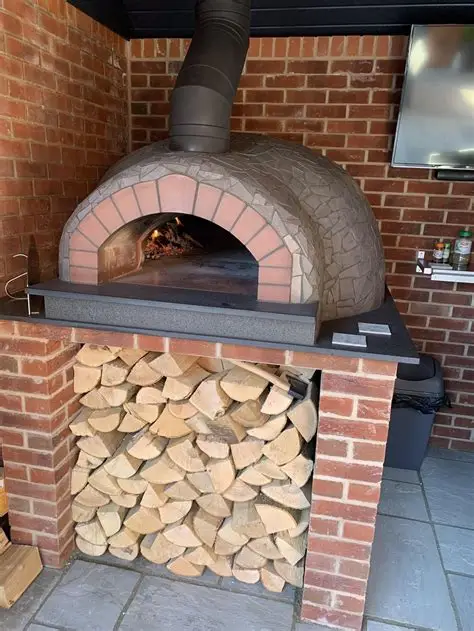
Commercial, Wood-Fired, Gas and Electric Pizza Ovens
Pizza ovens in Kenya play an increasingly important role in commercial food preparation, particularly in restaurants, hotels, cafés, bakeries and dedicated pizzerias. As demand for professionally prepared pizzas grows, food businesses require specialised cooking equipment that delivers consistent temperatures, efficient baking cycles and reliable production capacity. Therefore, investing in the right pizza oven can improve kitchen productivity, product quality and operational efficiency.
Unlike conventional domestic ovens, commercial pizza ovens incorporate specialised heating chambers, insulated walls and heat-resistant cooking surfaces. These components facilitate controlled heat transfer through conduction, convection and thermal radiation. Consequently, operators can achieve properly cooked pizza bases, evenly melted cheese and well-browned toppings.
Introduction to Pizza Ovens in Kenya
Pizza ovens operate using different energy sources, including firewood, liquefied petroleum gas (LPG) and electricity. Furthermore, manufacturers offer single-deck, double-deck, hybrid and conveyor configurations to accommodate different production requirements.
In Kenya, these ovens serve small cafés, established restaurants, hotels, outdoor catering businesses and large commercial kitchens. Whether you operate a neighbourhood pizzeria or a high-volume food establishment, selecting suitable pizza-making equipment requires careful consideration of temperature performance, baking capacity, energy consumption and installation requirements.
1. Types of Pizza Ovens Available in Kenya
Pizza ovens differ in their heating mechanisms, construction materials, temperature ranges and production capacities. Understanding these differences helps businesses select equipment that matches their operational requirements.
1.1 Wood-Fired Pizza Ovens
Wood-fired pizza ovens use seasoned hardwood as their primary fuel. Typically, manufacturers construct these ovens using refractory firebricks, refractory mortar, insulating materials and heat-resistant external finishes.
Their dome-shaped cooking chambers promote thermal circulation through radiation and convection. Meanwhile, the refractory cooking floor transfers heat directly into the pizza dough through conduction.
Depending on the design and operating conditions, a commercial wood-fired pizza oven can achieve temperatures of approximately 400–500°C. At these temperatures, suitable thin-crust pizzas can cook in approximately 60–120 seconds.
The refractory structure also provides substantial thermal mass. Therefore, it retains heat after the initial firing and supports successive cooking cycles.
Technical advantages:
- High-temperature cooking performance.
- Excellent thermal retention.
- Traditional wood-fired cooking characteristics.
- Suitability for restaurants and outdoor kitchens.
- Ability to prepare bread and selected roasted foods.
However, operators must manage firewood quality, combustion air, ash accumulation and chimney performance. Additionally, adequate ventilation helps remove combustion gases and smoke.
1.2 Gas-Fired Pizza Ovens
Gas-fired pizza ovens use LPG or another compatible gas supply to generate cooking heat. Their burners heat the oven chamber and cooking surface, while adjustable controls regulate the operating temperature.
These ovens suit commercial kitchens that require convenient operation and relatively consistent heat production. Furthermore, they eliminate the need for continuous wood-fire management.
Depending on the model, gas-fired ovens incorporate refractory stone floors, insulated chambers, stainless-steel housings and mechanical or digital temperature controllers.
Technical advantages:
- Convenient ignition and temperature adjustment.
- Consistent heat generation.
- Reduced ash handling.
- Suitability for extended commercial operation.
- Availability in different cooking capacities.
Nevertheless, correct burner sizing, gas-pressure regulation and proper ventilation remain essential. Qualified technicians should also inspect gas connections and safety devices.
1.3 Electric Pizza Ovens
Electric pizza ovens use electrical resistance heating elements to generate cooking temperatures. Depending on their configuration, these ovens incorporate upper and lower heating elements, refractory cooking stones, insulated chambers and adjustable temperature controllers.
They are particularly suitable for restaurants, cafés and commercial kitchens with reliable electrical supplies.
Electric models range from compact countertop equipment to large double-deck commercial machines. Consequently, businesses can select equipment according to their production requirements.
Technical advantages:
- Accurate temperature regulation.
- Convenient operation.
- Repeatable baking conditions.
- No direct combustion within the cooking chamber.
- Availability in compact and high-capacity configurations.
However, buyers must examine the electrical rating before installation. For example, a 12 kW oven operating on a three-phase supply requires an appropriately designed electrical connection. Therefore, consult a qualified electrician before purchasing large commercial equipment.
1.4 Hybrid Wood and Gas Pizza Ovens
Hybrid pizza ovens combine wood-fired and gas-fired heating arrangements within one oven structure. Consequently, operators can choose between the two energy sources according to their operating preferences.
For instance, a restaurant can use LPG during routine service and introduce wood firing when it wants traditional wood-fired cooking characteristics.
These ovens generally incorporate refractory domes, insulated chambers, gas burners and appropriate combustion arrangements.
Their flexibility makes them suitable for restaurants, resorts and commercial kitchens that serve different customer preferences.
1.5 Conveyor Pizza Ovens
Conveyor pizza ovens support continuous commercial pizza production. They use a motorised conveyor belt to transport pizzas through a heated chamber at a controlled speed.
Unlike conventional deck ovens, conveyor machines do not require operators to load and unload every pizza manually throughout the baking cycle. Instead, operators regulate belt speed and temperature to achieve repeatable cooking conditions.
Depending on the model, these machines operate using electricity or gas.
They are particularly suitable for:
- Fast-food restaurants.
- Pizza delivery establishments.
- Shopping mall food outlets.
- High-volume commercial kitchens.
- Food production facilities.
However, conveyor ovens require sufficient installation space, regular belt maintenance and suitable electrical or gas infrastructure.
2. Technical Comparison of Pizza Ovens
The following table provides indicative operating ranges for different commercial pizza oven configurations.
Table 1: Pizza oven types, temperatures and typical baking times
| Oven type | Indicative operating temperature | Typical baking time | Main application |
|---|---|---|---|
| Wood-fired | 400–500°C | 60–120 seconds | Artisan and Neapolitan pizza |
| Gas-fired dome | 300–480°C | 2–5 minutes | Restaurants and hotels |
| Electric deck | 280–400°C | 3–8 minutes | Cafés and commercial kitchens |
| Hybrid wood/gas | 350–500°C | 1–5 minutes | Premium restaurants |
| Conveyor | 230–300°C | 3–8 minutes | High-volume food outlets |
Note: These are indicative ranges, not universal manufacturer specifications. Actual temperatures and baking times depend on pizza thickness, dough formulation, toppings, oven design and heat distribution.
Figure 1: Typical pizza oven operating temperatures
| Oven category | Lower operating range | Upper operating range |
|---|---|---|
| Conveyor | 230°C | 300°C |
| Electric deck | 280°C | 400°C |
| Gas-fired dome | 300°C | 480°C |
| Wood-fired dome | 400°C | 500°C |
| Hybrid oven | 350°C | 500°C |
The temperature differences demonstrate why businesses should select ovens according to their preferred pizza styles. For example, traditional Neapolitan pizza requires considerably higher temperatures than many conventional commercial pizza preparations.
3. Commercial Pizza Ovens: Production Capacity and Configurations
Commercial pizza ovens accommodate different production volumes through their cooking chamber dimensions, number of decks and heating arrangements.
A single-deck oven contains one cooking chamber, whereas a double-deck model incorporates two independent or separately controlled chambers. Similarly, conveyor ovens use belt width and conveyor speed to determine production capacity.
Table 2: Commercial pizza oven configurations
| Configuration | Typical batch capacity | Suitable establishment |
|---|---|---|
| Countertop single deck | 1–2 pizzas | Small cafés |
| Floor-standing single deck | 2–4 pizzas | Small restaurants |
| Double-deck oven | 4–8 pizzas | Medium-sized pizzerias |
| Triple-deck oven | 6–12 pizzas | Busy restaurants |
| Commercial conveyor | Continuous production | Fast-food outlets |
| Large wood-fired dome | Approximately 3–6 pizzas | Premium restaurants |
Capacities are indicative and depend on pizza diameter and internal cooking-floor dimensions.
Calculating Pizza Oven Production Requirements
Before purchasing an oven, businesses should estimate the number of pizzas they expect to prepare during peak service.
Consider a restaurant that receives 80 customers during its busiest service period. If 70% of those customers order pizza, the establishment must prepare:
80 × 70% = 56 pizzas.
If 60% of those orders arrive within 90 minutes, the kitchen must prepare:
56 × 60% = 33.6 pizzas.
Therefore:
33.6 ÷ 1.5 hours = 22.4 pizzas per hour.
The restaurant should consequently select an oven capable of reliably producing at least 23 pizzas per hour under its actual operating conditions. A reasonable additional capacity allowance would be 20–30%.
This gives a target design capacity of approximately 28–30 pizzas per hour.
Such calculations help businesses avoid purchasing undersized equipment that creates production delays during peak periods.
4. Electrical Specifications and Energy Requirements
Electric pizza ovens require careful electrical assessment before installation. Their power ratings determine the electrical load, while voltage and phase requirements determine the appropriate connection.
For example, consider an electric pizza oven with a rated power of 6 kW.
If the oven operates continuously at its full rated power for 5 hours, its theoretical maximum energy consumption is:
Energy consumption = Power × Operating time
= 6 kW × 5 hours
= 30 kWh.
At an illustrative electricity tariff of KSh 30 per kWh:
30 × 30 = KSh 900.
Therefore, the theoretical operating cost would be KSh 900 for those five hours.
Actual consumption may differ because thermostatic controls cycle heating elements on and off. Moreover, insulation quality, loading frequency, ambient conditions and operating temperatures influence energy demand.
Table 3: Illustrative electricity consumption
| Oven rating | Operating period | Maximum energy consumption |
|---|---|---|
| 3 kW | 5 hours | 15 kWh |
| 4 kW | 5 hours | 20 kWh |
| 6 kW | 5 hours | 30 kWh |
| 9 kW | 5 hours | 45 kWh |
| 12 kW | 5 hours | 60 kWh |
| 15 kW | 5 hours | 75 kWh |
These calculations assume continuous operation at full rated power. They do not represent measured consumption under normal cooking conditions.
For three-phase equipment, the electrical installation must also accommodate the manufacturer’s current and connection requirements. Therefore, always verify the nameplate specifications before commissioning the oven.
5. Refractory Materials Used in Pizza Oven Construction
The durability and thermal performance of brick pizza ovens depend heavily on refractory construction materials. These materials withstand repeated heating and cooling while maintaining structural integrity.
5.1 Refractory Firebricks
Refractory firebricks form the cooking floor, dome and other high-temperature sections of traditional pizza ovens.
Manufacturers produce these bricks using selected refractory clays and other heat-resistant mineral constituents. Their composition determines their classification, thermal properties and maximum service temperature.
For pizza oven construction, buyers should consider:
- Maximum service temperature.
- Thermal conductivity.
- Thermal shock resistance.
- Compressive strength.
- Dimensional stability.
- Compatibility with refractory mortar.
5.2 Refractory Cement and Mortar
Refractory cement and mortar bind firebricks and help construct heat-resistant joints.
Unlike ordinary Portland cement mortar, suitable refractory formulations withstand elevated temperatures without suffering the same degree of thermal deterioration.
Depending on their chemical composition, refractory products can offer different temperature ratings.
5.3 Refractory Castables
Refractory castables consist of heat-resistant aggregates, bonding agents and other formulation additives. Contractors mix them with the prescribed quantity of water before casting or moulding oven components.
They are particularly useful for constructing:
- Refractory domes.
- Oven arches.
- Curved cooking chambers.
- Specially shaped thermal components.
5.4 Ceramic Fibre Insulation
Ceramic fibre blankets provide thermal insulation around high-temperature oven chambers.
Their fibrous structure contains numerous small air spaces, which restrict heat transfer through the insulation layer.
Depending on the product grade, ceramic fibre blankets may carry continuous-use temperature classifications of approximately 1,000–1,430°C or higher. However, the actual rating depends on the fibre composition and manufacturer.
5.5 Rockwool Insulation
Rockwool is manufactured from mineral fibres derived primarily from molten rock materials. It provides thermal and acoustic insulation in various industrial applications.
Nevertheless, ordinary building-grade rockwool should not be installed directly against a pizza oven’s high-temperature chamber. Instead, select insulation with a suitable manufacturer-rated service temperature and an approved installation arrangement.
Table 4: Refractory and insulation materials
| Material | Main application | Important technical property |
|---|---|---|
| Firebricks | Oven floor and dome | Thermal stability |
| Refractory mortar | Brick joints | High-temperature bonding |
| Refractory castables | Moulded oven structures | Heat resistance and structural integrity |
| Ceramic fibre blanket | High-temperature insulation | Low thermal conductivity |
| Suitable mineral wool | External insulation applications | Thermal resistance |
| Stainless-steel cladding | External protection | Corrosion resistance |
The selection of these materials must reflect the oven’s operating temperature, insulation design and installation conditions.
6. Applications of Pizza Ovens in Kenya
Pizza ovens support different commercial and domestic activities.
| Application | Recommended oven type | Main requirement |
|---|---|---|
| Small cafés | Countertop electric | Compact installation |
| Medium restaurants | Single or double deck | Moderate production |
| Large pizzerias | Double deck or conveyor | High production capacity |
| Hotels and resorts | Wood-fired, gas or hybrid | Versatile cooking |
| Outdoor catering | Wood-fired or portable gas | Mobility and flexibility |
| Shopping mall food outlets | Electric deck or conveyor | Consistent production |
| Residential outdoor kitchens | Compact wood-fired or gas | Space efficiency |
Furthermore, refractory ovens can prepare bread, flatbreads and selected roasted foods, making them useful beyond conventional pizza production.
7. Factors to Consider When Buying Pizza Ovens in Kenya
Selecting a suitable pizza oven requires a detailed assessment of your business requirements.
Production capacity: Establish the number of pizzas you expect to prepare during peak service. Subsequently, select equipment with adequate production capacity.
Temperature performance: Confirm the maximum operating temperature and the oven’s ability to maintain stable cooking-floor temperatures.
Energy source: Compare firewood, LPG and electricity according to availability, operating costs and infrastructure requirements.
Cooking surface: Examine the material, dimensions and thermal properties of the cooking floor.
Insulation: Effective insulation reduces heat loss and helps maintain stable cooking conditions.
Installation space: Check the oven’s external dimensions, access routes, working clearances and ventilation requirements.
Maintenance: Assess the availability of heating elements, burners, thermostats, conveyor belts and other replacement components.
After-sales support: Prioritise equipment supported by reliable technical assistance and accessible spare parts.
8. Pizza Oven Installation, Operation and Maintenance
Proper installation directly influences equipment safety, efficiency and service life.
Before installation, inspect the proposed location and verify the floor strength, ventilation arrangements, available energy supply and maintenance access.
Wood-fired ovens require suitable chimneys or flue systems to discharge combustion gases. Similarly, gas-fired ovens require correctly sized burners, suitable regulators and properly installed gas connections.
Electric ovens must receive power supplies that match their rated voltage, current and phase requirements.
Once installation is complete, operators should follow the manufacturer’s commissioning and curing instructions. In particular, newly constructed refractory ovens require gradual initial heating to remove residual moisture and reduce thermal shock.
Table 5: Recommended pizza oven maintenance schedule
| Maintenance activity | Suggested frequency |
|---|---|
| Remove ash and food debris | Daily or after use |
| Clean cooking surfaces | Daily |
| Inspect burners and gas connections | According to manufacturer instructions and applicable safety requirements |
| Inspect electrical connections | Periodically by qualified technicians |
| Examine refractory joints | Monthly |
| Inspect chimney and flue passages | At manufacturer-recommended intervals |
| Check insulation and external cladding | Every 3–6 months |
| Comprehensive equipment inspection | Annually or as recommended |
The schedule should be adjusted according to operating intensity and manufacturer instructions. Gas safety inspections must not be postponed simply because the suggested routine inspection interval has not elapsed.
9. Pizza Ovens in Kenya: Choosing the Right Equipment
The best pizza oven depends on your business model, preferred cooking method, energy supply and production requirements.
Wood-fired ovens provide traditional high-temperature cooking, whereas gas-fired models offer convenient heat regulation. Meanwhile, electric deck ovens support controlled baking, while conveyor ovens accommodate continuous commercial production.
Hybrid ovens offer additional flexibility by combining wood and gas heating arrangements.
At Maavaroz Industrial Limited, we recognise the importance of reliable equipment, suitable refractory materials and effective thermal insulation in commercial food preparation.
Whether you are establishing a new pizzeria, upgrading an existing restaurant or constructing an outdoor cooking facility, selecting the correct pizza oven is an important investment in operational efficiency.
Contact us to discuss pizza oven requirements, technical specifications, refractory materials, installation considerations and suitable commercial solutions in Kenya.