Dry Ice – High-Performance Cooling, Preservation and Industrial Applications
Dry ice is the solid form of carbon dioxide (CO₂), widely used for cooling, freezing, transportation and specialised industrial applications. Unlike conventional water-based ice, it changes directly from a solid into gas through a process known as sublimation. Consequently, it leaves no liquid residue, making it particularly suitable for applications that require clean and moisture-free cooling. At approximately -78.5°C, dry ice provides exceptionally low temperatures for preserving temperature-sensitive products, maintaining frozen goods and supporting specialised cooling operations.
Types of Dry Ice Products
It comes in different physical forms to accommodate various cooling and industrial requirements. Common types include:
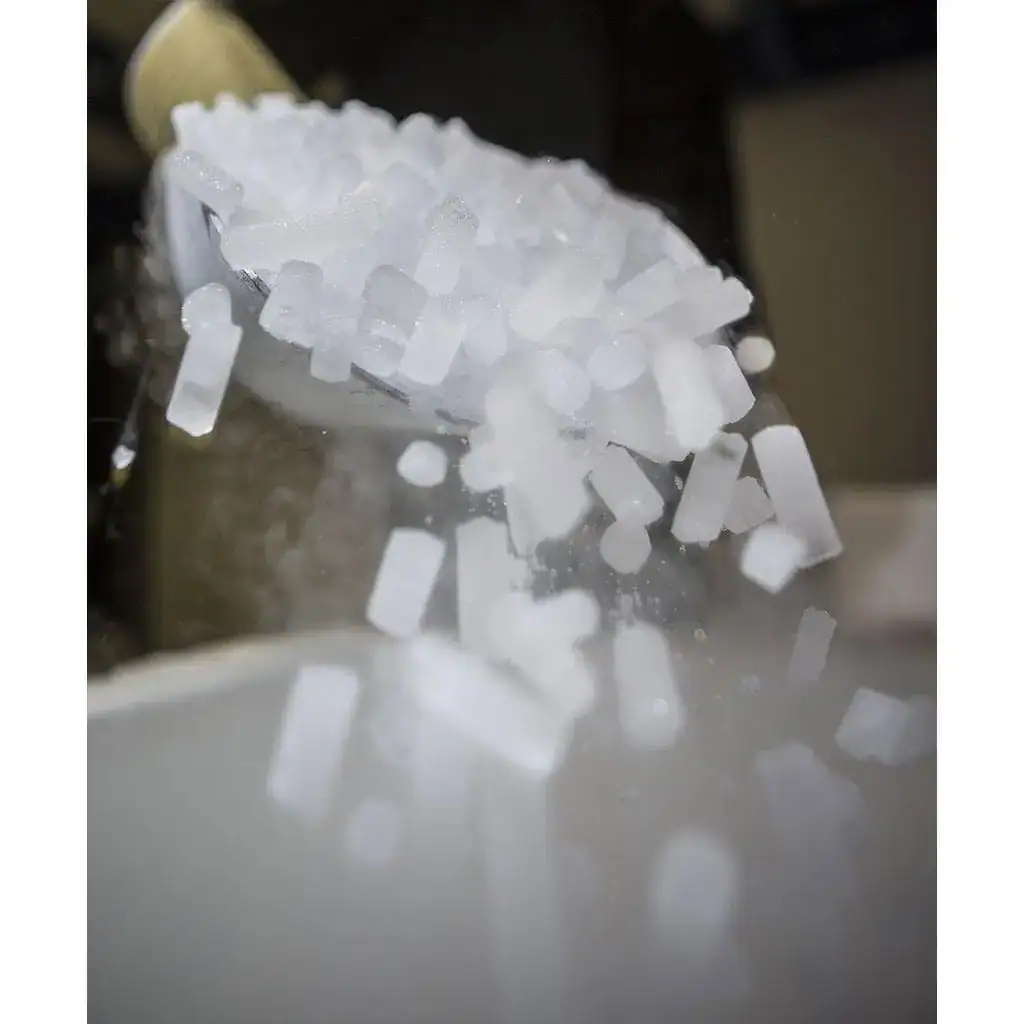
- Dry Ice Pellets: Small cylindrical pieces commonly used for food preservation, industrial cooling, laboratory applications and its blasting.
- Dry Ice Blocks: Solid, compact blocks that provide longer-lasting cooling for transporting frozen products and maintaining low temperatures.
- Dry Ice Nuggets: Small irregular pieces suitable for cooling applications that require convenient handling and effective temperature control.
- Dry Ice Slices: Flat sections cut from larger blocks for specialised storage, transportation and preservation requirements.
Applications
It supports several commercial, industrial and scientific operations. For example, food processors and distributors use it to maintain frozen temperatures during transportation and storage. Similarly, pharmaceutical companies and medical laboratories use it to transport temperature-sensitive biological samples and specialised materials.
Moreover, entertainment companies use it to produce dense, low-lying fog effects for stage performances, exhibitions, photography and special events. When placed in warm water, it releases carbon dioxide gas rapidly, creating a distinctive fog effect.
In addition, manufacturing industries use it blasting to remove grease, dirt, paint and other surface contaminants from machinery without introducing water or conventional abrasive cleaning materials.
Benefits
It offers several operational advantages. Firstly, its extremely low temperature supports effective freezing and preservation. Secondly, its sublimation process eliminates liquid water residue. Furthermore, its different product forms accommodate various storage, cooling and cleaning applications. However, users must provide adequate ventilation and handle dry ice with insulated gloves because direct contact can cause severe cold burns. Never store it in airtight containers, as sublimating carbon dioxide can create dangerous pressure.
Dry Ice Supply in Kenya
Maavaroz Industrial Limited supports commercial and industrial requirements for dry ice products used in cooling, preservation, transportation and specialised applications. Whether businesses require its pellets or blocks, selecting the appropriate form and quantity helps achieve reliable temperature control and efficient handling.