
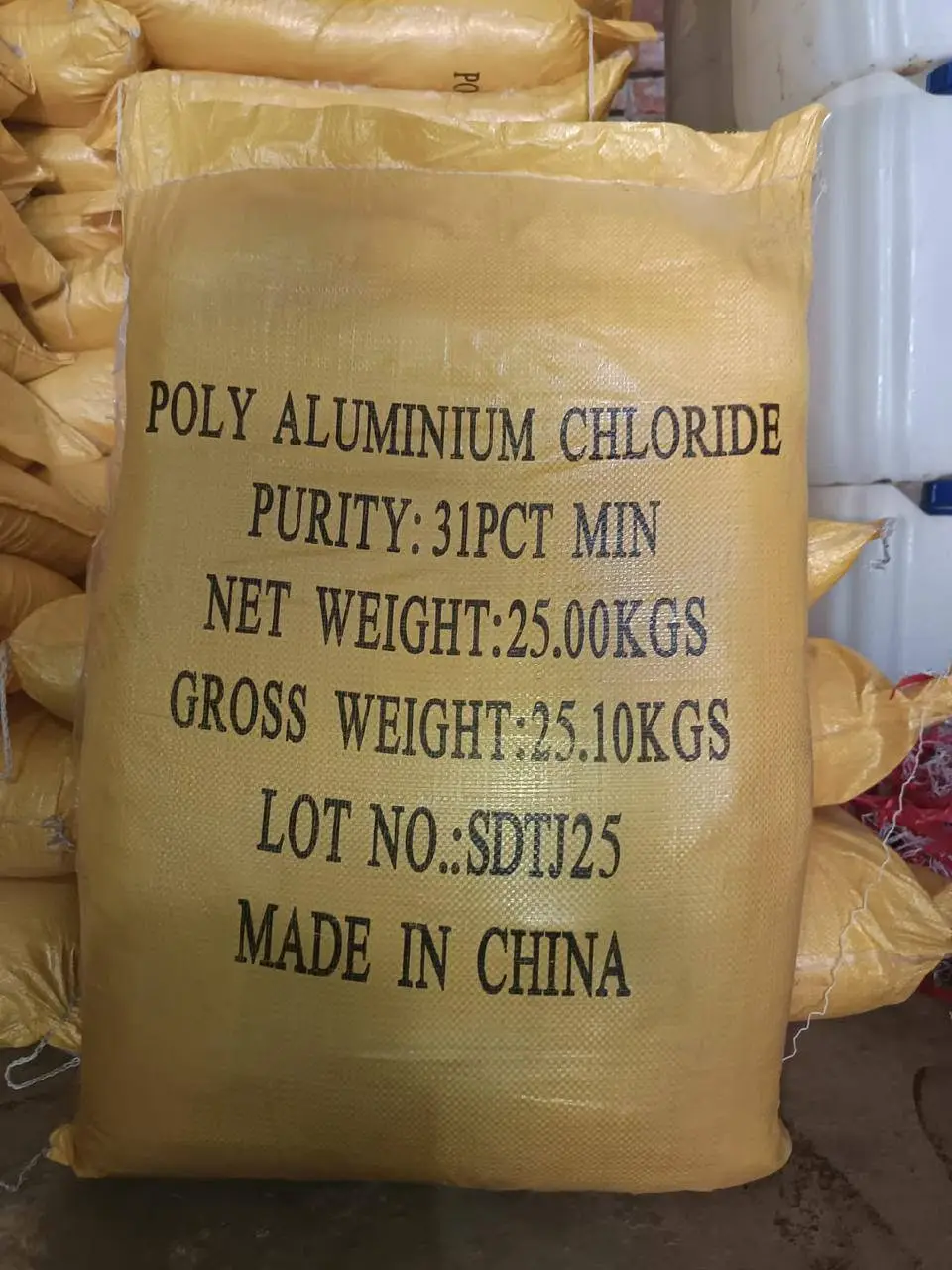
poly aluminium chloride(PAC)
Poly Aluminium Chloride (PAC) is an effective water treatment chemical for drinking water, wastewater, and industrial applications.
Description
Poly Aluminium Chloride (PAC): Purity, Grades, Properties and Water Treatment Applications
Poly Aluminium Chloride (PAC) is a high-performance inorganic coagulant widely used in drinking water purification, wastewater treatment and industrial water processing. Its quality primarily depends on its aluminium oxide (Al₂O₃) concentration, basicity, insoluble matter and chemical composition. Therefore, buyers should assess PAC purity before selecting a suitable grade for their water treatment requirements.
PAC purity and commercial grades
The purity of Poly Aluminium Chloride is commonly expressed through its aluminium oxide (Al₂O₃) content. This measurement indicates the concentration of the active aluminium component responsible for coagulation and flocculation. Generally, manufacturers supply PAC powder in different concentrations, ranging from approximately 28% to 32% Al₂O₃. However, higher aluminium oxide content does not automatically guarantee better performance because basicity, water solubility and other chemical properties also influence treatment efficiency.
For example, 28% PAC powder supports general industrial wastewater treatment. Meanwhile, 29–30% grades offer a suitable balance between concentration, performance and commercial value. Furthermore, 30–31% PAC provides a higher-concentration option for demanding municipal and industrial water treatment applications.
Chemical composition and technical properties
Poly Aluminium Chloride is a pre-hydrolysed aluminium-based polymer with the general chemical formula:
Its composition allows it to neutralise electrical charges on suspended particles. Consequently, these particles combine to form larger aggregates known as flocs, which settle more easily or separate through filtration.
The following parameters help determine the quality of PAC powder:
| Technical parameter | Typical commercial specification |
|---|---|
| Aluminium oxide (Al₂O₃) | 28–30% |
| Basicity | 40–85% |
| Water-insoluble matter | ≤0.5% |
| pH (1% solution) | 3.5–5.0 |
| Appearance | White to pale yellow powder |
| Water solubility | Soluble in water |
Specifications vary by manufacturer and grade. Always confirm the actual values using the product’s Certificate of Analysis (COA).
Betakim+2
How Poly Aluminium Chloride works in water treatment
PAC improves water clarification through coagulation and flocculation. First, its positively charged aluminium species destabilise negatively charged suspended particles. These particles would otherwise remain dispersed in water because of their electrical charges.
Next, PAC promotes particle aggregation and forms aluminium hydroxide flocs. These flocs capture suspended solids, colloidal impurities and certain organic contaminants. Subsequently, the larger particles settle at the bottom of clarification tanks or become trapped during filtration.
As a result, water treatment plants achieve improved turbidity reduction, colour removal and suspended-solids separation. Moreover, PAC can operate across a relatively broad pH range and often requires lower dosages than conventional aluminium sulphate (alum), depending on the raw water characteristics.
Australian Drinking Water Guidelines+1
Industrial and commercial applications of PAC
Poly Aluminium Chloride serves several industries because it improves solid-liquid separation and supports efficient water purification.
Its major applications include
Drinking water treatment: Municipal water treatment plants use PAC to reduce turbidity, suspended particles and colour before filtration and disinfection.
Wastewater treatment: Industrial and municipal facilities apply PAC to separate suspended solids and improve effluent clarification.
Swimming pool water treatment: PAC helps remove fine suspended particles that conventional filtration may not capture efficiently.
Paper manufacturing: Paper mills use PAC to support retention, drainage and process-water clarification.
Textile processing: Textile wastewater treatment systems use PAC to assist with colour and suspended-solids removal.
Food and beverage industries: Treatment facilities use PAC to clarify process water and manage wastewater.
Mining operations: Mineral processing plants apply PAC to improve water clarification and facilitate solids separation.
PAC handling, storage and quality assurance
Proper storage helps maintain the chemical quality and effectiveness of Poly Aluminium Chloride. Therefore, store PAC powder in tightly sealed, moisture-resistant packaging. Additionally, keep it in a cool, dry and well-ventilated warehouse, away from direct sunlight and incompatible materials.
Before purchasing, request a technical data sheet, Safety Data Sheet and batch-specific Certificate of Analysis. For drinking-water applications, also verify compliance with the applicable drinking-water treatment chemical standards and relevant certification requirements.
Poly Aluminium Chloride supplier in Kenya
Maavaroz Industrial supplies industrial chemicals and water treatment chemicals for commercial and industrial applications. We focus on providing quality-oriented chemical solutions that support water purification, wastewater management and industrial processing.
Whether you require PAC for municipal water treatment, industrial effluent clarification or commercial water purification, select the appropriate aluminium oxide concentration and basicity for your application.
Contact Maavaroz Industrial for Poly Aluminium Chloride supply, technical specifications and quotations in Kenya.





Reviews
There are no reviews yet.